Feature · Plans
Plans built around your race date
Pick a race and a date and RunToMax composes the weeks between here and there. Each session runs on your Watch, each finished session is scored, and when your body says the plan is too much or too little, the plan proposes a change and you decide.
How a plan is built
- Anchor: distance (5K, 10K, half marathon, marathon) and race date. The calendar is laid out backwards from race day.
- Level: four plan levels set the weekly structure; the starting point comes from your Apple Health history, not a questionnaire.
- Paces: every session target is derived from your threshold pace, so targets move when your fitness does.
- Variety: quality sessions rotate through workout families so a 16-week block is not the same Tuesday sixteen times.
Adaptation you approve
RunToMax reads how you are responding — the grades of your recent hard sessions, how easy runs felt, training load, readiness — and when the signals disagree with the plan it proposes a change: ease a session, move it, replace it. Nothing changes silently. You keep the session, take the proposal, or move it yourself, and the plan records what happened and why.
On the wrist
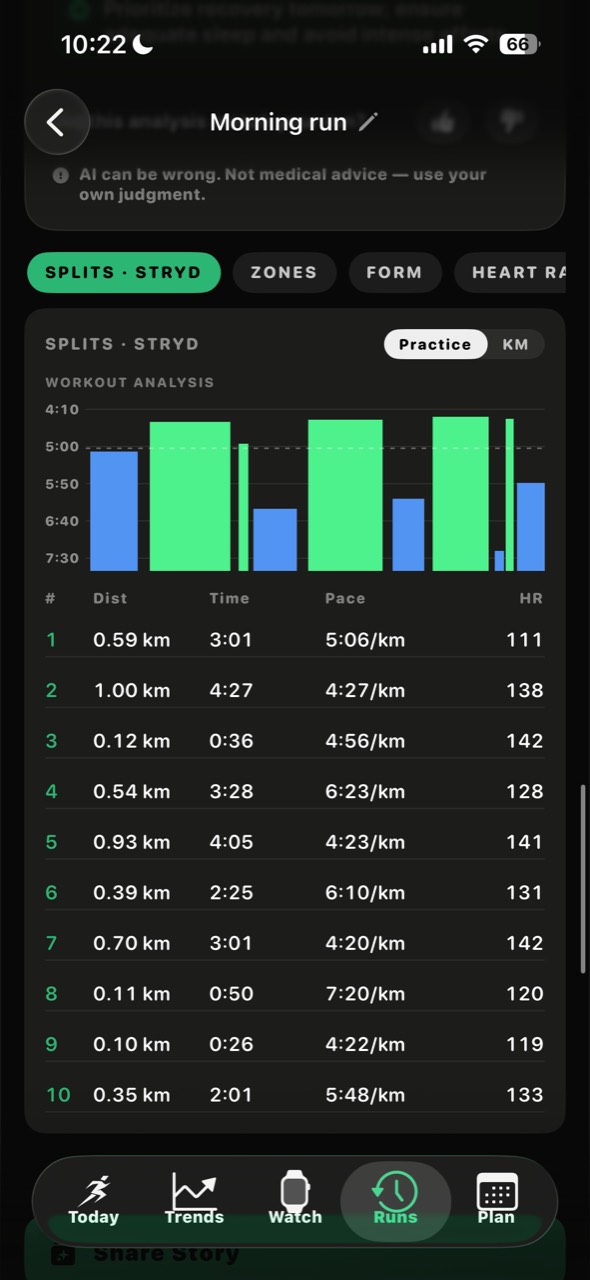
Today’s session is sent to the Apple Watch as a structured workout: warm-up, reps, recoveries, cool-down, with the target band for each step and a haptic cue at each transition. How that works is on the Apple Watch page.
No plan is also a plan
You can use RunToMax with no plan at all. Every run is still classified and gets its verdict, your threshold and training paces still update, and readiness still reads each morning. Plans are there when a race is; the coach is there either way.
Bring a workout from elsewhere
A session written by another coach or app can be pasted as text on the iPhone. RunToMax parses it on the device into steps and sends it to the Watch like one of its own.
Checked against the app on